Episode 175:
"Korean Narco" Who Ran a Drug Empire Behind Bars: Fugitive for 10 Years, Finally Caught..!
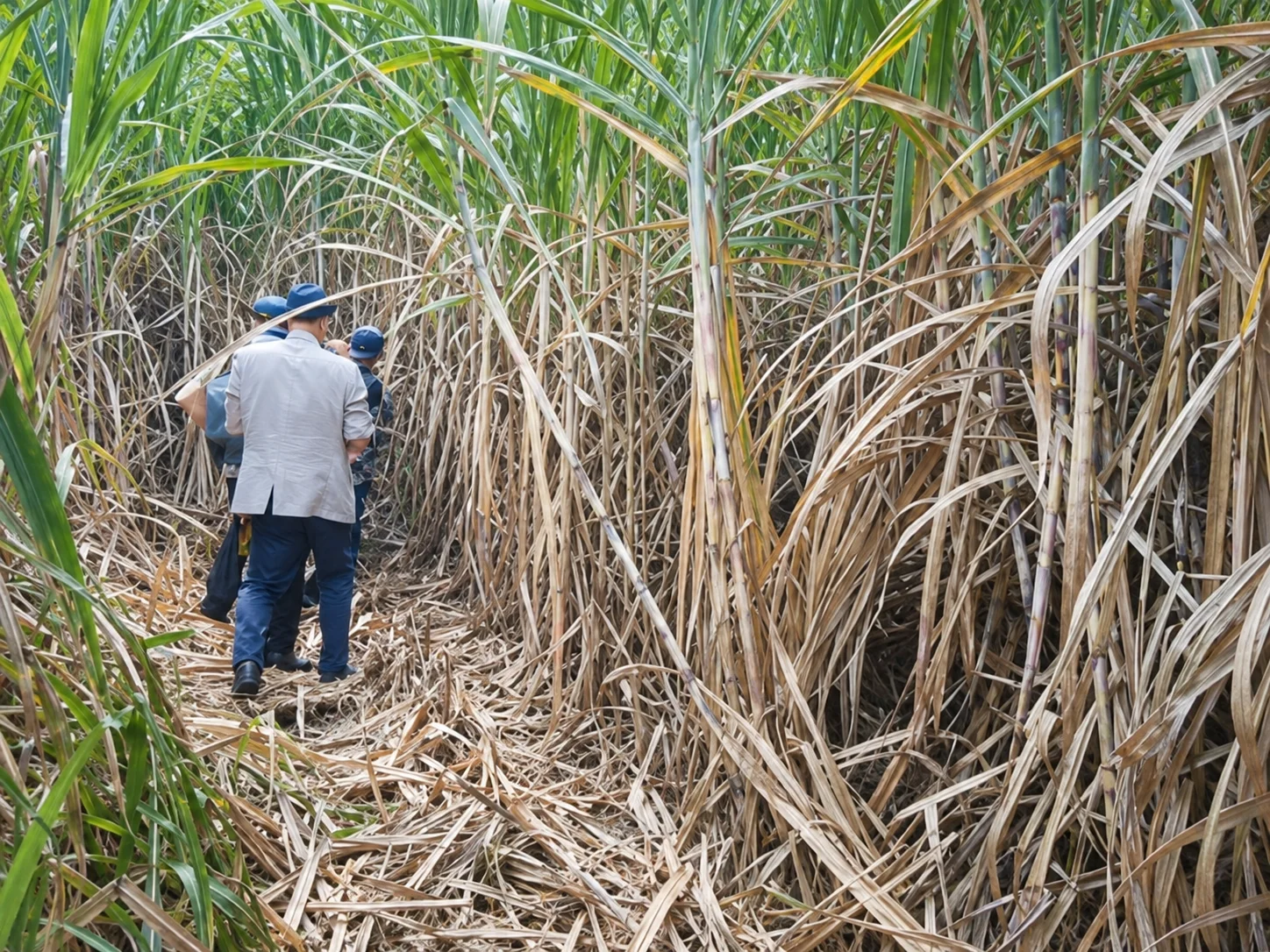
On the morning of October 11, 2016, a farmer walking a path in Bacolor, Pampanga, in the Philippines noticed blood on the ground and a trail of flattened grass leading down a slope into a sugarcane field, where the stalks stood taller than a man. Among the broken stalks lay a body, half-buried in the dirt. Police found two more in the brush at the bottom of the slope: two men and a woman.
All three had been shot in the head, their wrists and legs tightly bound with tape. All wore T-shirts and shorts, and none wore underwear. Philippine police could tell they were from Northeast Asia and suspected they were Korean. At the time, of China, Japan and Korea, only Korea had a dedicated liaison office inside the Philippine police, known as the Korean Desk.
Three Fugitives in a Sugarcane Field
The local police handed the case to the Korean Desk the next day, and Inspector Ji-hoon Lee took charge. Fingerprints sent to Korea identified the victims: Park, 48, Shim, 52, and Maeng, a 49-year-old woman. A four-person team flew in from Korea: an investigator, a firearms expert, a forensic specialist and a profiler. The victims were not ordinary travelers. In 2015 they had run an investment firm in Seoul selling FX margin trading, buying and selling currency pairs on exchange-rate moves, and used jargon and promises of huge returns to take about $11 million from roughly 130 people. Park, the CEO, had then fled to the Philippines with Shim, his executive director, and Maeng, his managing director. Revenge by their victims was an obvious theory, but the wounds did not fit a hired killing. The bullets had passed through the temples at a diagonal, meaning the victims were lying on their sides and shot from above. Contract killers in the Philippines typically shoot a target in the street or a restaurant and flee; they do not drive victims to a field and half-bury them. Police began looking for someone the victims knew.
The Man Called Janjo
In the local Korean community, everyone recognized the three: newly arrived, seen with wealthy businessmen, spending freely. And they were always with one man, a 38-year-old Korean known as Janjo, who ran a junket room, a private room for VIP gamblers inside a casino, in Angeles. Janjo told Inspector Lee they were old acquaintances from Korea, that he had given them his own room, and that on the night of the 10th he had driven them to Manila to meet someone. But Manila was three hours from the field, and Pampanga was closer to Angeles, where they had been staying. At Janjo's house luminol showed no blood, but investigators found a deposit slip for about 30 million pesos, roughly $640,000, at a casino junket room in Clark, in the names of the dead Mr. Park and a co-owner: Park Wang-yeol, Janjo's real name. Half-empty soda cans in the kitchen carried the fingerprints of the three victims, Park Wang-yeol and a 34-year-old Korean, Chun-soo Kim, who had arrived on October 4 and gone home on the 13th, two days early. Korean police found Kim installing greenhouses near Changwon; he said he had gone abroad to clear his head. Analysts in Korea spent ten days on nearly four terabytes of footage between Park's house and the field and found his car at a gas station near the field at 4:28 a.m. on the 11th. Then Philippine police recovered a bag Park had dumped by the road holding a .45-caliber pistol and a silencer. Forensic tests matched it to the killings.
The Curtain in the Selfie

Park had taken cash from his casino and vanished with his Filipino girlfriend. A tip placed him in a Manila condominium of more than a thousand units, where he would never have registered under his own name. His girlfriend kept posting on social media, and one selfie showed wavy-patterned curtains behind her. Because the building had exterior hallways, investigators walked it floor by floor looking for those curtains, and on November 17, 2016, a month after the killings, they arrested him. In Korea, Chun-soo Kim, whose clothes and bag strap carried gunshot residue, gave up when he heard. Park had once run a seafood import company and appeared on TV carving a giant tuna, until he embezzled $75,000 and received a suspended sentence and the company folded. He recruited for a pyramid scheme and in 2014 ran an illegal online casino before fleeing to the Philippines, where he did odd jobs for wealthy Koreans. Paid to hide the three fraudsters, he opened his junket room; after a month of them living with him and meddling in a business they claimed to have invested in, he decided that if they disappeared, the casino deposit would be his. He promised Kim, who had invested in his online casino and wanted his money back, $7,500 to help. Kim spent a week running errands for the three while practicing his shooting, and the two scouted the field and their escape. In the early hours, Kim called one of the victims to the door, the two men burst in, taped the three, put them in a car trunk and drove them to the field. The cane roots were too tough to dig, so they buried Shim in the one hole they managed and rolled the others down the slope. They took $1,800 from the victims' safe, Park withdrew the casino deposit, and they spent the money in casinos and nightclubs. When the bodies were found quickly, Kim fled home without the money he had been promised and threw his phone into a river. His fingerprint on a soda can was what connected him.
Final Thoughts
In June 2017 the Seoul Central District Court sentenced Chun-soo Kim to thirty years for robbery-murder and abandoning bodies, and the sentence was upheld on appeal. Park, held in immigration detention awaiting deportation, broke out through the ceiling in March 2017. He was recaptured three months later in the north with a large quantity of drugs, and the Philippines charged him there and refused Korea's request to take him back. In prison he met Hyeong-ryeol Kim, known as Sara Kim, one of Southeast Asia's biggest drug traffickers, who sent ketamine to Korea by mail and courier and had buyers collect it from hidden dead drops using coordinates sent on Telegram. From 2019 Park ran the same kind of operation from his cell, with a former inmate as his chief operator in Korea and later his own nephew involved. In April 2022 a Philippine court sentenced him to 52 to 60 years for the murders. He lived in an air-conditioned cell with a smartphone, ran his network on Telegram, and spent $75,000 on a drone escape plan that collapsed when the press caught a practice run on camera. Many suspect he was really after the $11 million the three had taken, which has never been found. In March 2026, Korea secured his temporary extradition on drug charges. Police say that between 2019 and 2024 he trafficked about 39 pounds of drugs into Korea, worth $4.7 million. He can be tried in Korea only for the drugs. The murders belong to the Philippines, and when his Korean trial ends, he is due to go back.
Park Wang-yeol killed three Koreans in the Philippines, but because the murders happened there, Korea can try him only for drug trafficking, and after that he is due to return to a Philippine prison where he lived in comfort and ran his business. How should countries handle jurisdiction when a citizen commits serious crimes abroad?
WE DOCUMENT.
YOU DECIDE.
Our interpretation is only one possible perspective.

