Episode 121:
"World Most Evil Prisoner" TWISTED Case of Jamie Osuna
11:00 a.m., November 13, 2011. The El Morocco Motel on Golden State Avenue in California was not your average overnight stay — a hub for drug dealing, drug use, and prostitution, the kind of place where doors were left open and cars slowed as they passed. That day, a housekeeper making her usual rounds reached room 19, home to a long-term guest she hadn't seen in a while. Worried, she knocked repeatedly, got no answer, and let herself in with her master key — then screamed and stumbled backward.
Inside, a woman's body was frozen in a position that seemed almost impossible for a human body to hold. The housekeeper called 911, hysterical: "There's a body here and it's horrible! Someone did something insane! Please, just get here now!" When police arrived, even veterans who'd seen decades of cases found themselves speechless. No one wanted to go inside.
Fifty-Seven Wounds
The victim was kneeling on the floor, hips raised, arms stretched forward — a grotesque echo of a yoga pose. The back of her skull had been struck with a blunt object, and a stocking and green cord were wrapped around her neck. The autopsy found fifty-seven separate stab wounds, evidence of sexual assault, and mutilation from both a fist and a blunt weapon. Three distinct causes of death were identified: blunt force trauma, strangulation, and stab wounds — meaning the attack hadn't been continuous. The killer struck her, checked whether she was still breathing, tried something else, and checked again, seemingly intent on keeping her alive as long as possible before she finally died of massive blood loss. Examiners concluded she'd suffered hours of torture before death.
The victim was thirty-six-year-old Yvette Peña, who had lived in room 19 for three months. A mother of six, she'd lost everything to drug addiction — her family cut her off, and with no money, she'd turned to sex work, with a steady stream of men coming and going from her room. That detail made her clients the obvious suspect pool, but the motel had no security cameras and no guest log of any kind, leaving investigators with nothing to trace. Canvassing turned up nothing, and even a media appeal produced a flood of tips that led nowhere.
A Wife's Warning

Then came the break: a woman named Joelle Castellano called, hesitant and frightened. "I think it's my husband. We're separated. He called and threatened me five days ago. He told me he killed a woman who looked just like me at the motel. Then he told me I was going to be next. I called the police right away, but nobody would believe me." Police identified her husband as twenty-three-year-old Jaime Osuna — already a habitual offender with a record spanning drugs, theft, assault, and attempted murder.
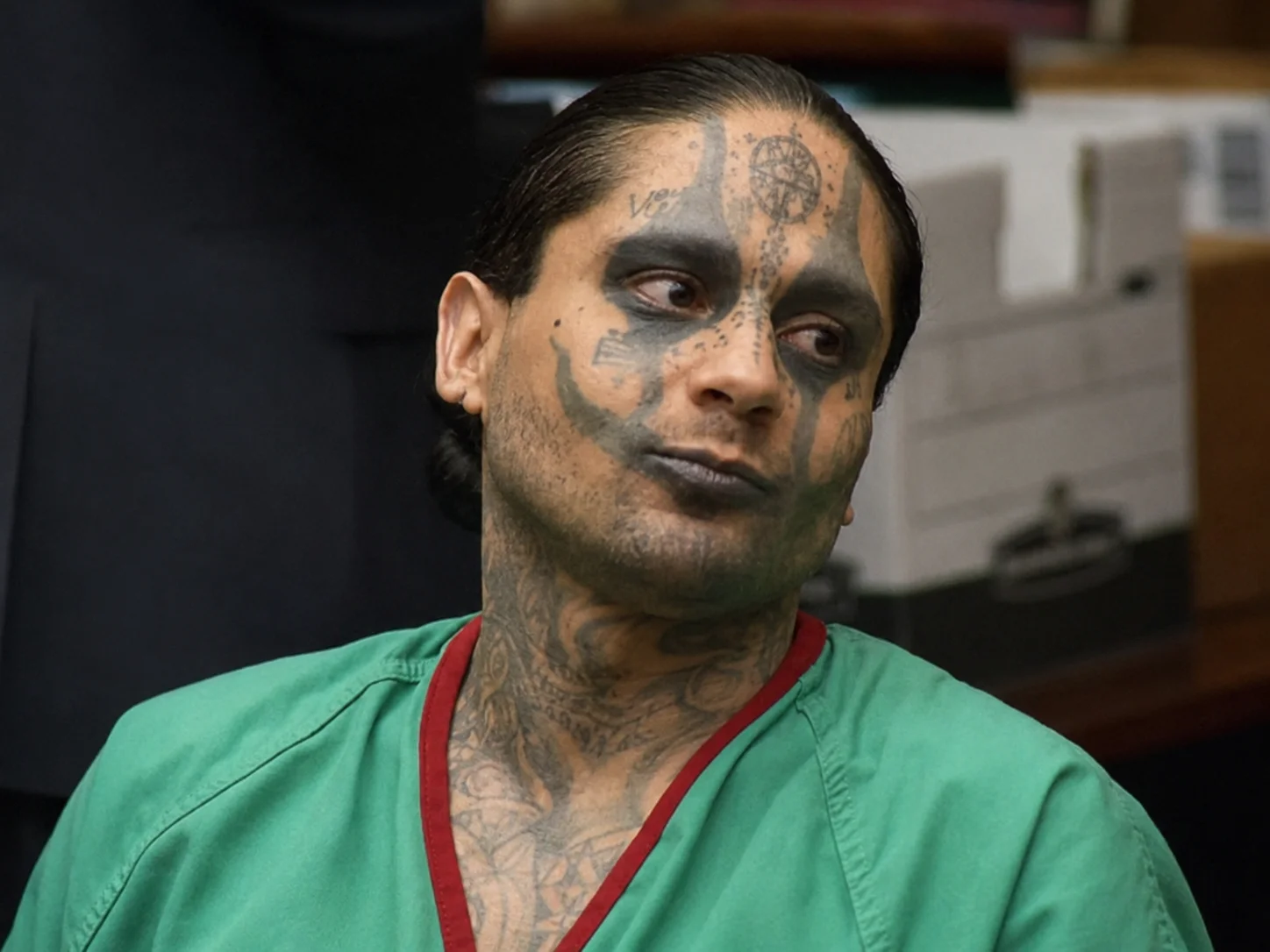
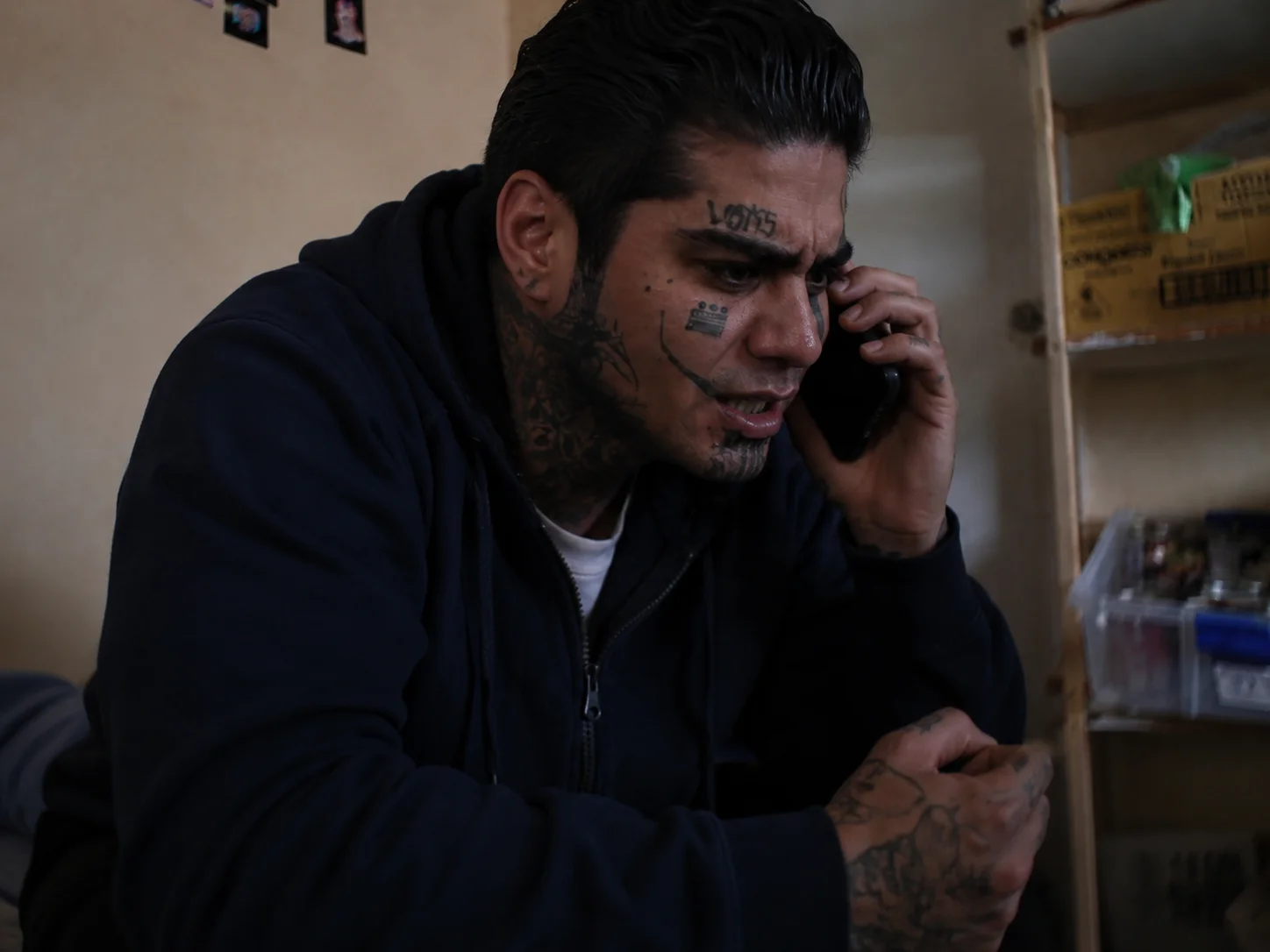
Osuna's history explained little and excused nothing. His father kicked his pregnant mother, causing brain damage before birth. His father died young; his mother's next husband, Jeff, was equally violent and once threw baby Jaime from a moving car when he wouldn't stop crying, compounding the brain damage. By eight, Jaime was stuffing the family cats into a hot oven or freezing them to death repeatedly. At fifteen, he stabbed a classmate at school and showed no remorse. In and out of prison for years, he treated his growing rap sheet as a trophy collection, adding facial tattoos with every release — a dark line under his eye, gang lettering across his forehead, a teardrop marking a kill, and ink beside his mouth resembling the Joker's grin.
Obsession From the Start
Osuna met Joelle Castellano in December 2008 at a house party she was hosting. He was instantly fixated, flirting relentlessly and shadowing her all night. When she danced with another man, he grabbed a kitchen knife and slashed the stranger's chest out of pure jealousy — landing him in prison on attempted murder charges. Rather than walking away, Joelle mistook his obsession for love, exchanged letters with him in prison, and married him after his release. They had a child together, and for a time he seemed genuinely devoted, doing housework and caring for her during pregnancy — but his possessiveness never eased; he hated her leaving the house, convinced she was seeking other men, and their fights escalated to physical violence, including a beating severe enough to break her ribs, sending him back to prison for domestic assault.
Joelle gave birth alone. Released, Jaime begged for another chance and took anger management classes, but nothing changed — soon after, he became addicted to meth, and his already damaged mind deteriorated further, his rages growing more frequent and violent until he choked her unconscious. That was Joelle's breaking point; she threw him out and separated. Even then, she had no idea how deep his obsession ran — he bombarded her with hundreds of daily calls and texts, oscillating between death threats and desperate apologies, until the call warning he'd already killed a woman who resembled her.
A Confession, Then Silence
Jaime fled once identified as the prime suspect. Police tracked him to a relative's home in Bakersfield, where he barricaded himself claiming to have a grenade, triggering a tense SWAT standoff that lasted until dawn before his arrest. He denied the murder outright, admitting only to meeting Yvette for sex at the motel and insisting she was alive when he left — dismissing his call to Joelle as an empty bluff he'd happened to guess correctly.
Struggling with guilt and fear that she could be his next target, Joelle agreed to help police by visiting him in prison and coaxing him to open up. Playing along, she pretended sympathy — and it worked. Jaime described murder as more thrilling than drugs or sex, called himself a sadist, mimed strangling someone with his bare hands, and admitted he'd stayed in the room with Yvette's body for days afterward, high on meth, engaging in necrophilia and other acts he described as unforgettable. He gave police everything except specifics — and once his prosecutor entered the picture, he recanted and went silent.
"I Will Kill Again"
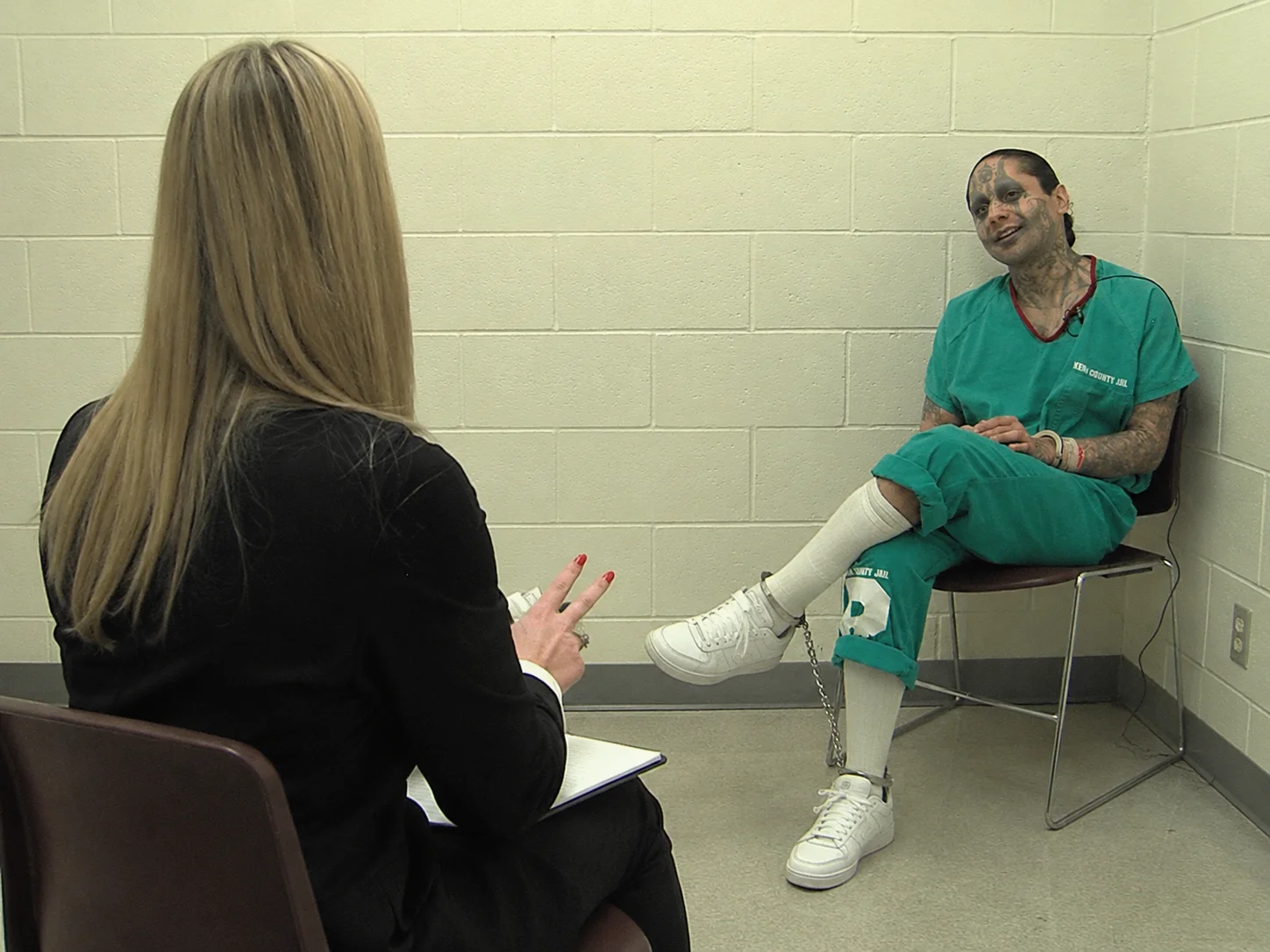
Even behind bars, Jaime kept causing chaos — throwing skinned rats at guards as "gifts," displaying the carcasses as trophies, and crafting a homemade weapon from four jail-issued razors he called a "Tomahawk," which he used to attack another inmate's face, neck, and chest. Each incident added charges and extended his stay in the more comfortable county jail rather than state prison, a pattern many believed was deliberate strategy on his part — delaying his trial for six years. Facing an endless legal grind, prosecutors eventually offered a plea deal: Jaime pled guilty in exchange for the death penalty being taken off the table. At sentencing on May 15, 2017, he yawned at the victim's family and flashed the judge a mocking thumbs-up. He received life without parole.
That wasn't the end. In a later interview, he bragged about uncaught murders — a gang member he claimed to have stabbed to death at thirteen, and a thirty-two-year-old woman he said he'd murdered and buried in an orange orchard at nineteen. Police investigated but found no supporting evidence and closed the inquiry as a false confession. From solitary confinement, Jaime left a final warning: "I will kill again. I absolutely will." Two years later, on March 9, 2019, he was moved into general population. The very next day, a guard noticed his cell bars covered with a bedsheet — against protocol — and opened the door to find forty-four-year-old Luis Romero, a new cellmate who'd just served twenty-seven years for a murder committed as a teenager and was awaiting a parole hearing, collapsed and bleeding out, the cell soaked in blood. Jaime had smuggled his tomahawk with him and been waiting for the opportunity. He cut off Romero's finger, gouged out his eye, and sliced his mouth ear to ear, watching him die slowly before writing on the wall in his blood: "I am a man of many faces."
Final Thoughts
Charged again with murder, torture, and mutilation of a corpse, Jaime faced prosecutors determined to seek the death penalty this time — until his defense argued he suffered from schizophrenia and pushed for a finding of insanity. A psychological evaluation deemed him incompetent to stand trial, and he was committed to a secure mental hospital, where he remains. The trial for Luis Romero's murder never happened. Yvette Peña left behind six children; Luis Romero had served twenty-seven years and was on the verge of a second chance. Jaime had told prison officials directly that he would kill again, and the system moved him into general population anyway — a warning ignored until it cost someone else their life.
Jaime told police in solitary confinement, "I will kill again without fail," and two years later, once moved into general population, he did. What responsibility do you think a prison system carries when it disregards a direct threat like that from someone already convicted of extreme violence?
WE DOCUMENT.
YOU DECIDE.
Our interpretation is only one possible perspective.

