Episode 162:
Japan’s Most Notorious Female Con Artist Made $1.5M, And Lost Every Single Cent to a Host
On May 12, 2023, a man in his forties rushed into a police station in Aichi Prefecture, Japan, and said his girlfriend had been kidnapped. Three months earlier he had met a 20-year-old college student named Kana Murakami on a dating app. She texted him good morning every day and comforted him after work. Then her messages thinned out. When he asked why, she said she owed rent to her roommate, Miku Ieda, apologized for mentioning it, and insisted she would handle it herself. He offered to pay and sent the money to Miku's account.
Soon afterward Kana tried to end the relationship. She still owed Miku more, she said, and would have to appear in an adult film to repay it. Cancelling the contract carried a $22,000 penalty. He sent that too. Then a message arrived from Miku: "Kana has been kidnapped." After that, neither woman answered.
The Girlfriend Who Never Existed

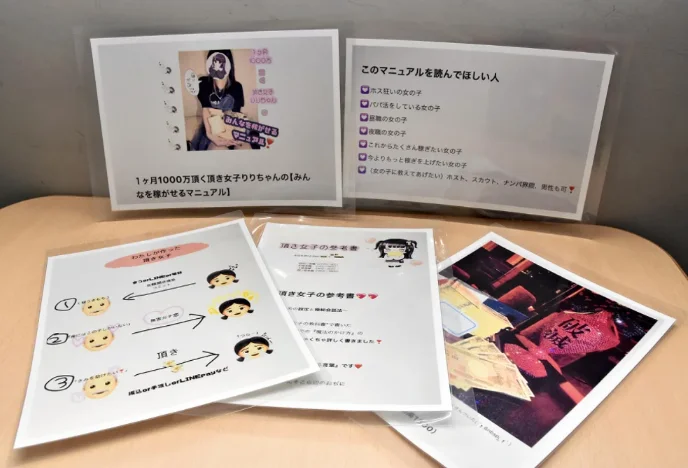
Police found no record of a student named Kana Murakami. There was no address, no school, and no phone in her name. The roommate was easy to find, because the bank account was in her real name: Miku Ieda, a 20-year-old college student in Nagoya. Her account history showed a second man, aged 63, who had been sending money for months. He also had a 20-year-old girlfriend named Kana Murakami from a dating app, and was paying thousands of dollars a month toward her living expenses because her family was poor. Miku first denied knowing anything. Confronted with the records, she admitted she had invented Kana and played both parts herself. She had taken more than $74,000 from the two men and was arrested for fraud. When officers searched her room, they found a document titled "Magical Girl Riri-chan's Complete Guide to Earning a Million."
Riri-chan's Manual

The guide ran to about 25,000 characters and explained which men to choose on dating apps, how to approach them, and how to make them hand over money. Its author was not hiding. Riri-chan had livestreamed for years, called women like herself itadaki joshi, "receiving girls," and bragged that in five years no one had filed a fraud complaint against her. She sold the manual for between $74 and $223 to nearly a thousand buyers. Those who paid more joined a group chat of over three hundred people for one-on-one advice, and Miku was one of them. The manual told readers to target an "oji," an older man who was lonely, had no hobbies or goals, had no one to rely on, had little experience with women, and was bad with money. The steps were to dress modestly and ask for nothing, message him every day until she was part of his routine, then slow the replies until he asked what was wrong. She was to reveal a money problem, never ask for money directly, and refuse his first offer so that he believed helping was his own idea. In April 2023 Riri-chan used it on Satoshi, an office worker in his fifties who lived alone. She told him her parents were demanding $60,000 for the cost of raising her. He offered $15,000, later cancelled his insurance to find more, and sent her over $300,000 in all. The final step was "aftercare": keep pretending to be in love so the man never realizes he was cheated. Miku skipped it and was caught within three months.
Where the Money Went

Riri-chan was Mai Watanabe, 25. She was born in Kanagawa Prefecture in 1998. Her father burned her with a lighter and threatened her with a knife, and her mother and sister did not intervene. She had severe eczema from birth, and classmates called her "Germs." In sixth grade she ran away and began using social media to find men who would take her in and pay her for sex. She started compensated dating in middle school and worked in the sex industry as an adult. In May 2018 she went to a host club for the first time and met a host named Yuji. He texted her outside work, told her that seeing her gave him strength, and asked her to become his "ace," the client who spends the most on a host. She gave up her apartment and moved into a capsule hotel nearby so she could spend more on him. When illness stopped her from working, she began asking former clients for money. A blunt request for $25,000 got nothing, but a man who heard a story about a dream she could not afford sent $1,500. She then studied what Yuji had said and done to make her spend, and wrote it down. That became the manual. She took about $1.5 million with it, and it went back to the host clubs.
Final Thoughts
Watanabe's trial began in April 2024. She was sentenced to eight and a half years in prison and fined $80,000 for fraud and related charges. Yuji received three years, suspended for five, for knowingly accepting money obtained by fraud. Miku Ieda received the same suspended sentence. In 2025 Japan changed the law to make it illegal for businesses to exploit customers' romantic feelings for sales, or to push people into sex work on the pretext of debt, and host clubs in Kabukicho faced a government crackdown after more than fifty years of operating. The method Watanabe sold to a thousand buyers was the one that had been used on her. The men she chose were lonely and wanted to matter to someone, which was also how a host had found her.
Mai Watanabe built her scam manual by writing down the tactics a host had used to get money from her, and she received eight and a half years while the host who took the money received a suspended sentence. Did the courts weigh the two of them fairly?
WE DOCUMENT.
YOU DECIDE.
Our interpretation is only one possible perspective.

