Episode 124:
Deadly Illusion: The Man Who Loved a Crossdresser
A man with long, flowing hair and a breezy dress, speeding along on a motorcycle. From underground idols to maid cafés, Japan has subcultures that defy imagination. Today's case begins in the deepest shadows of one of them — a twisted desire born of loneliness.
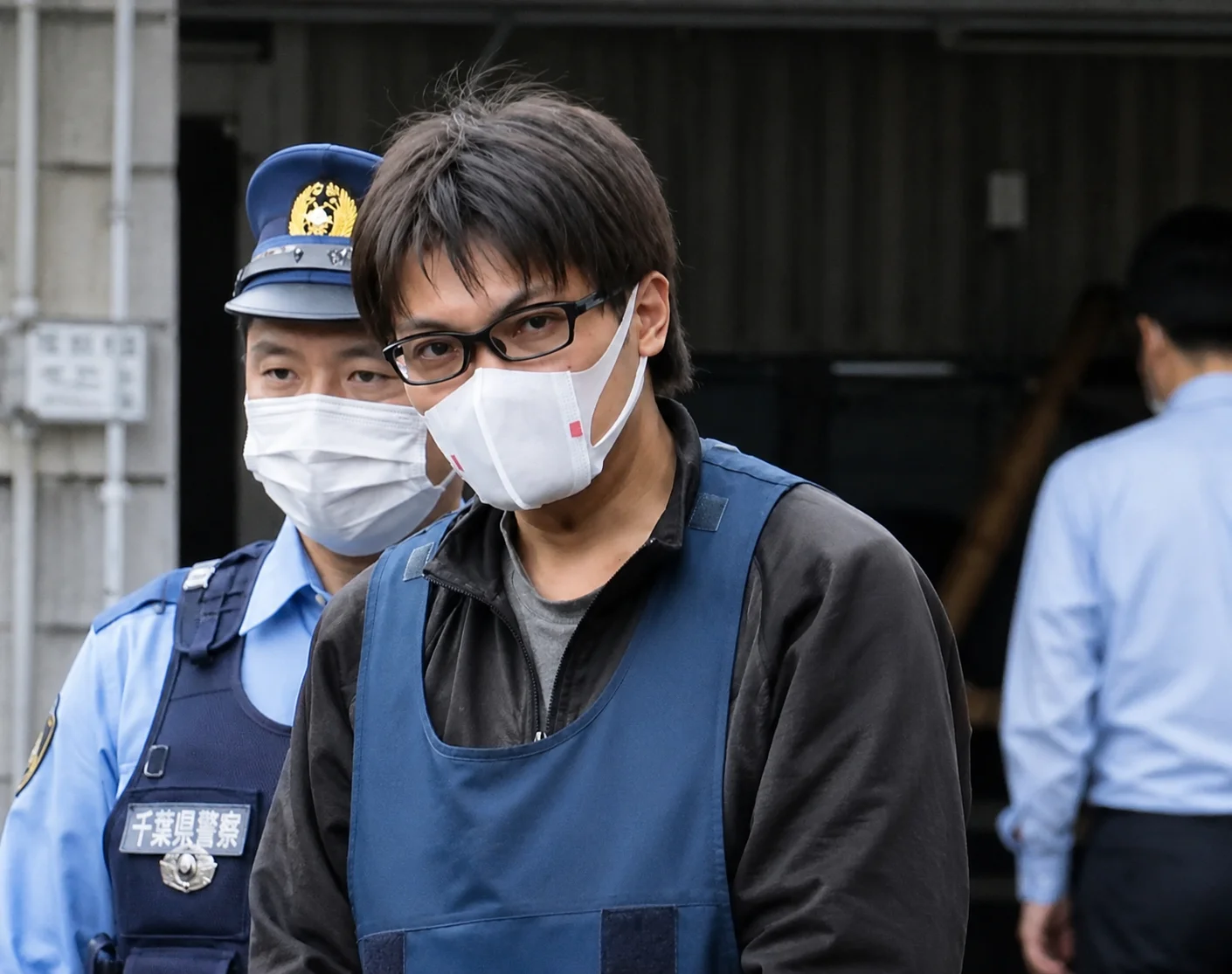
Just after midnight on May 12, 2021, a middle-aged couple walked into a police station in Japan's Chiba Prefecture, followed by a visibly anxious man in his thirties. He hesitated, then made a shocking confession: "I did something terrible. I killed someone." As if to prove it, he pulled out a knife stained red with blood. The man was identified as Yoichiro Saito, a thirty-six-year-old truck driver.
No Connection Between Them
Police rushed to the scene he described. Inside, the stench of blood filled the air — a young man's body lay in the entryway, his back and chest mutilated almost beyond recognition, dead from massive blood loss. The house also reeked of kerosene, leading police to theorize the killer had intended to burn the scene and destroy evidence. The victim was identified as twenty-one-year-old Kensuke Iwamoto. Given the confession and physical evidence, Saito was arrested for murder.
Investigators immediately hit a wall: no motive connected the two men whatsoever. No grudge, no money dispute, no professional relationship. Saito, thirty-six, was a truck driver based in Saitama; Iwamoto, twenty-one, lived in Chiba. Different regions, a fifteen-year age gap, no overlap in their lives at all — until the crucial clue came from Saito himself. Breaking down in the interrogation room, he confessed something no one expected: "I just loved him. I loved him so much. But then he just decided, out of nowhere, that he was leaving me, that he was going to cut off all contact. And because of that, I lost my reason for living." According to Saito, the two men had been lovers.
A Rest Stop Encounter
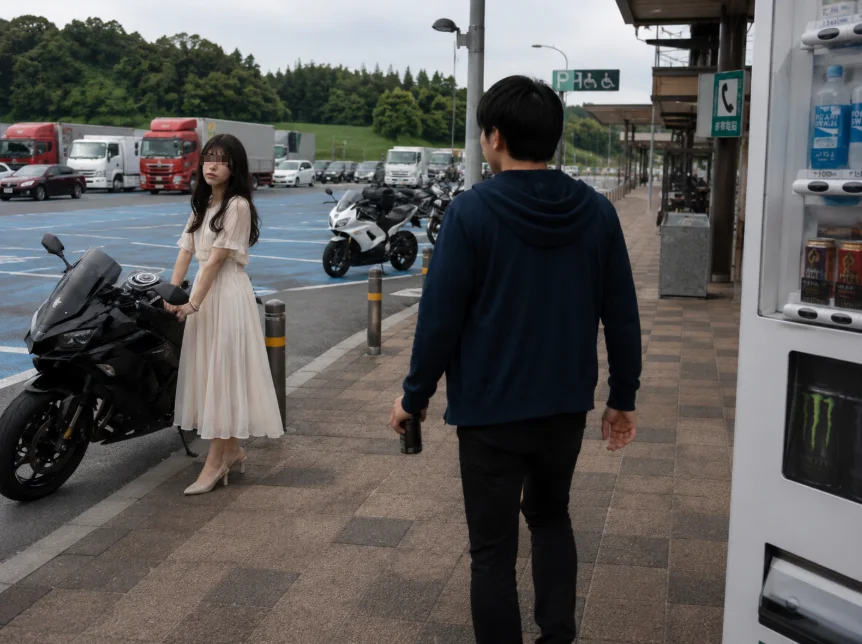
The story behind it began with Saito's profound loneliness. Living alone, exhausted from long-haul driving, and freshly divorced, he tried filling the void with nightly drinking and dating apps, but nothing built a real connection — the emptiness only grew. He eventually took up motorcycle riding to clear his head, posting his rides on social media and joining in-person club meetups. In 2020, pulled over at a highway rest stop, he noticed someone unusual among the leather-clad bikers: a slender figure in a flowing dress and makeup, standing beside a motorcycle. Curious, he approached: "That's a really nice bike. Mind if I ask your name?" The reply, shy: "Um, Iwamoto. My name's Iwamoto."
Iwamoto was a cross-dressing man — a fact Saito knew from the start, drawn purely by curiosity rather than any assumption. They hit it off immediately, exchanged numbers, and messages soon became constant, day and night. For Saito, exhausted after long shifts, a text from Iwamoto made his loneliness disappear. He grew increasingly emotionally dependent, and the two began meeting for meals and dates before becoming intimate — Iwamoto being male was never an obstacle for Saito, who felt this person had filled the void in his life completely.
Same Bed, Different Dreams
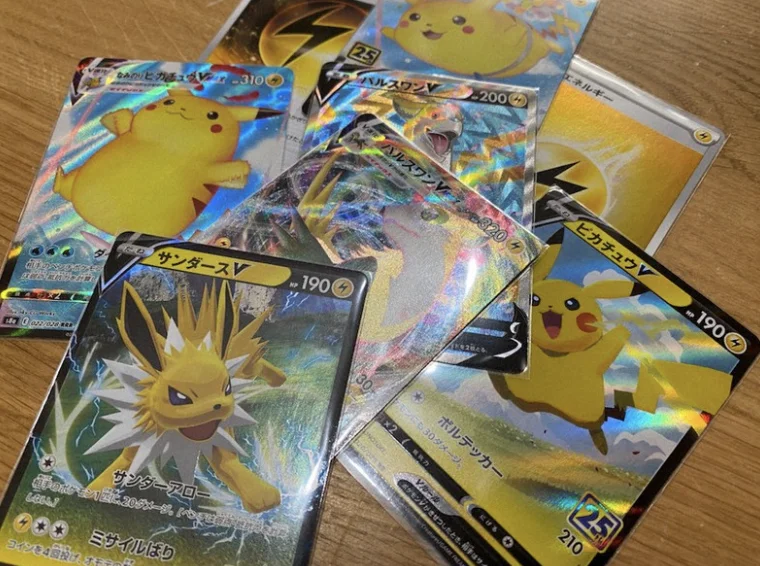
What Saito never grasped was Iwamoto's actual perspective. Iwamoto dressed as a woman to meet older men for money, in what's known in Japan as compensated dating — when Saito first approached him, he simply assumed a new client. Even their intimacy was, for Iwamoto, purely transactional; he expected payment every time. Saito, an ordinary truck driver, couldn't match what Iwamoto's other clients paid, but he didn't see it that way — believing they were genuinely dating, he treated the money as an affectionate allowance for a doted-on younger boyfriend. To Iwamoto, it was disappointing pocket change compared to his other arrangements, and he began subtly manipulating Saito for more — hinting, "I'm just so broke right now, if this keeps up I'm afraid I might have to go back to selling my body to other men." The thought of the man he loved with someone else for money sent Saito into a panic, and he gave Iwamoto his prized motorcycle and sold his entire, years-in-the-making Pokémon card collection — roughly $7,000 in total. Even fully drained, Saito remained entirely at his mercy, telling himself he'd be happy simply staying close to Iwamoto as "just a friend" if a real relationship wasn't possible given their age gap and society's judgment.
It didn't last. Once Iwamoto had the $7,000 in hand, he decided Saito had nothing left to offer, blocked his number, and vanished. Losing the one person he'd come to depend on entirely, Saito spiraled into despair — and an old thought he'd carried since childhood resurfaced: whenever things became unbearable, he would simply end his own life. He decided this was that moment.
A Suicide Pact Never Discussed

That raises the obvious question: if Saito meant to die, why was Iwamoto the one found brutally murdered? Saito's explanation was that he intended to kill Iwamoto first, then set himself on fire so they could "leave this world together" — a plan he'd never actually discussed with Iwamoto at all, invented entirely in his own head, with no regard for what Iwamoto might have wanted or the value of another person's life.
He prepared meticulously in advance, concealing a weapon and bringing kerosene. On the night of May 10, 2021, at 11 p.m., Saito knocked on Iwamoto's door and, the moment it opened, butchered him. He then doused himself and the house in kerosene and tried to light it — but for reasons unclear, his clothes wouldn't catch fire despite repeated attempts. In that pause, he claimed he suddenly worried the fire might spread to neighboring homes, abandoned his own suicide attempt, and left Iwamoto's body behind as he slipped out alone.
Final Thoughts
His account fell apart under scrutiny. Rather than reckoning with the murder he'd committed, his statements centered almost entirely on his own supposed victimhood — how much he'd sacrificed, how Iwamoto had betrayed him — casting the entire tragedy as Iwamoto's fault. But his actions immediately after the killing undercut the story completely: the first place he went wasn't a moment of collapse, but his girlfriend's house — a relationship he'd been maintaining the whole time he claimed to be devastated over Iwamoto. There, he calmly and rationally explained what he'd done, and at her urging, turned himself in with his parents. That sequence — rational explanation, deliberate self-surrender — undercut any claim that he'd acted out of a diminished, suicidal mental state. It looked, instead, like a premeditated act of revenge, followed by a fabricated suicide-pact excuse to soften the blame.
At trial beginning March 18, 2022, the defense argued Saito suffered an adjustment disorder from loneliness and lost all reason when Iwamoto left him, seeking leniency. Prosecutors countered that his feelings were a one-sided obsession, pointing to his careful planning both before and after the murder, and his composed behavior when turning himself in as proof he understood exactly what he'd done. The court agreed with the prosecution, ruling explicitly that the shock of a one-sided breakup, however real, could never justify murder or reduce criminal responsibility. Saito was sentenced to seventeen years in prison and did not appeal. Iwamoto's approach to Saito was far from innocent — built entirely around money — but that never made what happened to him deserved. No one has the right to take a life simply because things didn't go their way, and Saito's attempt to dress his cruelty up as heartbreak earned him exactly the judgment the law was built to deliver.
Saito insisted he only meant to kill Iwamoto as part of a suicide pact he never actually discussed with him, yet went straight to his girlfriend's house afterward to calmly explain himself before turning himself in. What do you think that sequence of actions actually reveals about how much control he had over what he did?
WE DOCUMENT.
YOU DECIDE.
Our interpretation is only one possible perspective.

