Episode 169:
Two Coffee Cups, Two Serial Killers, and a 22-Year-Old Lie
On the night of February 13, 2004, 47-year-old Kyung-hee Lee stopped answering her phone. She ran an adult store on the second floor of a building in Chungmu-dong, Seo-gu, Busan. Separated from her husband for years, she had raised two daughters on her own, working as a housekeeper and taking odd jobs, and had opened the shop six years earlier to make ends meet. She was close to her daughters and called them often. When she could not be reached after 10 p.m., one daughter asked her boyfriend, 23-year-old Hwang, to go and check.
He arrived at 1 a.m. The iron door to the stairs, which Kyung-hee always locked after closing, was wide open, and the shop lights were on. Inside, the sofa by the window had been overturned and goods were scattered across the floor. Kyung-hee lay in front of the display case.
Two Coffee Cups
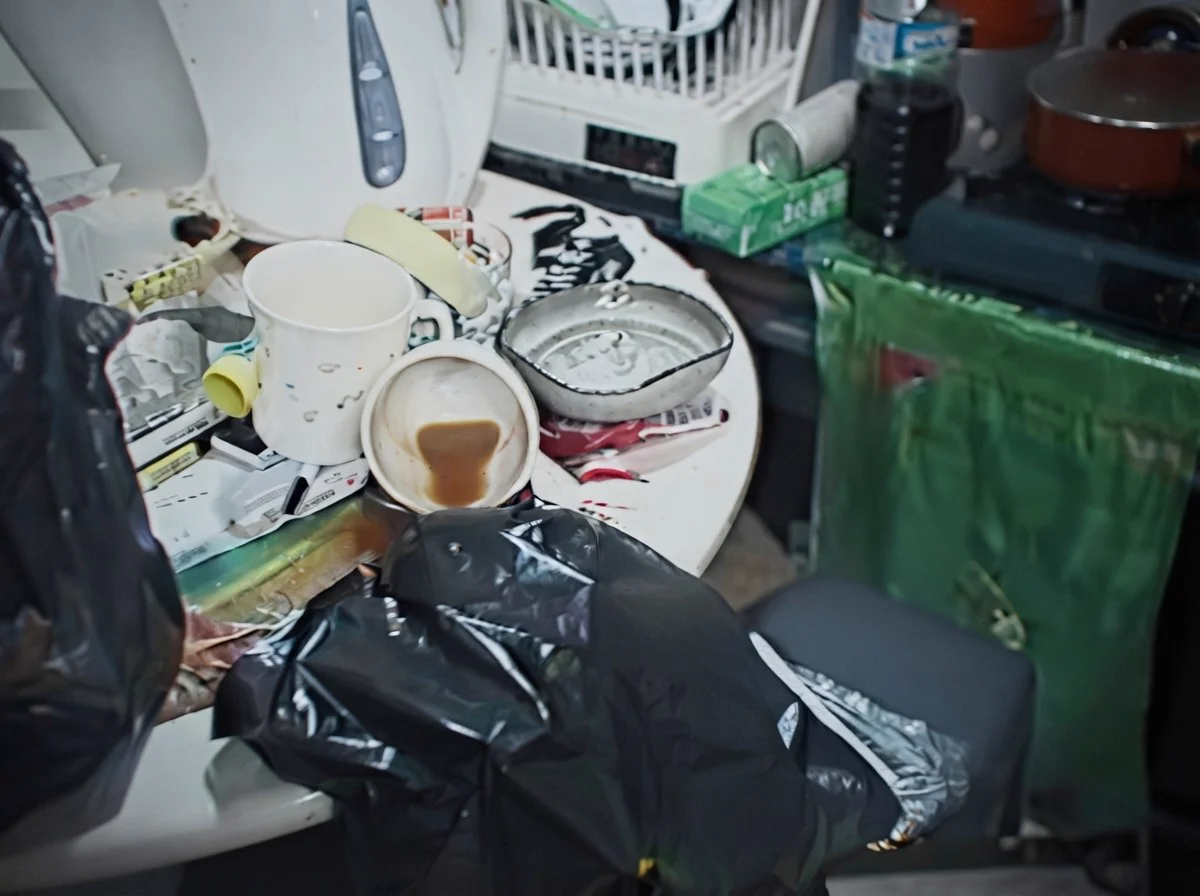
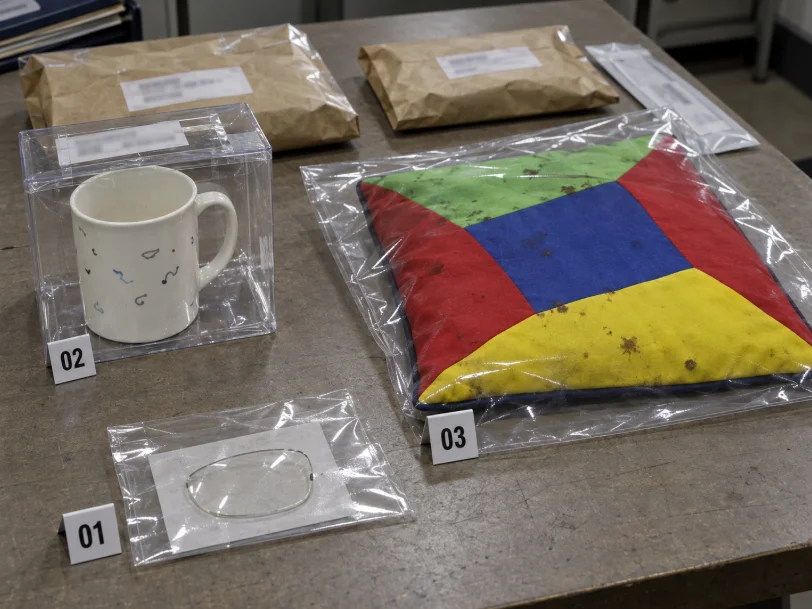
Her face had been beaten almost beyond recognition, and there were bruises on her hands and shins. She had been strangled; there were handprints and nail marks on her neck, and her hyoid bone and thyroid cartilage were broken. The killer had sexually assaulted her with an object from the shop after she was dead and posed her body. He left her wallet and cash and took only her underwear and her phone. No semen was found. Two coffee cups stood by the refrigerator, unusual in a shop where customers rarely linger. The fingerprints on them belonged to a middle-aged man on his first visit, who said she had offered him coffee to put him at ease. He bought a video and left, and phone records cleared him: right after he left, at 9:38 p.m., Kyung-hee called a friend and broke off to say a customer had come in. That customer was most likely the killer. Near the sofa police found a button and a single eyeglass lens, signs of a violent struggle. A man's blood, type O, was on two cushions, and a man's DNA was mixed with hers on the plastic wrapping of the object used in the assault. The samples were too small for the technology of 2004; it took until 2015 to confirm the blood on the cushions and the wrapping came from the same man. Of 23 fingerprints, three, on the steel door frame, the glass entrance door and the bathroom tiles, were never identified.
The First Confession

The shop was near Jagalchi Market and the port. February 13 fell at the end of the bright-moon period, when fishing boats stay in port and their crews spend time in the bars of nearby Wanwol-dong. A knife found at the scene, which the daughter said was not her mother's, was the length fishermen use to mend nets. By the time investigators pursued that theory, the boats had gone back out to sea. Five months later, in July 2004, police in Seoul arrested Yoo Young-chul, who had killed twenty people. He confessed to two unsolved murders in Busan, a city that had only three at the time, and one was the adult store case. The timing fit his four-month pause in killing, when he forged a police ID and used it to pose as an officer and extort money from a sex worker in Incheon. He typically took phones and watches and left cash, and Kyung-hee's wallet, with $120 inside, had been left behind. He had once killed a street vendor selling fake Viagra, and her shop sold Chinese-made Viagra. His first murder after the pause, in March 2004, was a strangling, and his blood type was O. But he had falsely confessed to another killing, a stabbing in Seoul's Imun-dong a week before the Busan murder, until blood evidence pointed to someone else, and a court found he had lied to build his reputation. He did not wear glasses, and he went to great lengths never to leave his blood behind, once burning down a house after cutting his finger. DNA from the cushions did not match him.
Number Four on the List
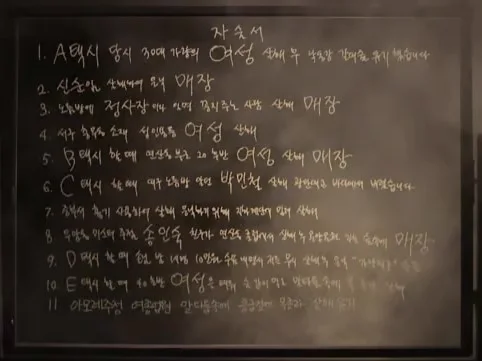
In September 2010, Lee Moon-gi, whose case later inspired the film Dark Figure of Crime, strangled a woman in her sixties who worked at the Gogogo nightclub in Chungmu-dong after she scolded him for paying for gas with her card, and he was caught four days later. From prison he wrote to a detective that he had killed eleven people and listed them on two sheets of A4 paper. For eight years and more than 100 letters, he claimed not to remember or demanded money before he would talk. At least one item was true: the bones of his live-in girlfriend, who disappeared in Daegu in 2003, were found where he said. Number four on the list read: "Chungmu-dong, Seo-gu, Busan, adult store murder." The nightclub where he killed in 2010 was in the same building as Kyung-hee's shop, sharing its entrance. His mother had died when he was in middle school, and he was drawn to older women and turned violent when they rejected him; his girlfriend and the nightclub worker were both older than him, and the nightclub worker, like Kyung-hee, was strangled. He had burned off six of his fingerprints with a car battery, and three prints at the shop could not be identified. He was from Busan, had worked on fishing boats, wore glasses, frequented the Chungmu-dong dawn market, and had type O blood. The DNA did not match. Lee then said he had not acted alone and that his accomplice was married and living well, but he never named him. In the summer of 2018 he took his own life in prison.
Final Thoughts
Both men knew details of a case that had barely been reported, at a time when the news was full of other serial killers. Yoo Young-chul had served seven years in prison and Lee Moon-gi had 37 prior convictions, and one possibility is that both heard about it from someone they met inside. A recent re-examination of the evidence points somewhere else entirely. The lens was ground for astigmatism, a prescription few people had, and came from rectangular frames popular with businessmen in their forties and fifties at the time. The footprints matched dress shoes, and the manufacturer identified the button as one used on blue collared shirts. The killer may have been neither a fisherman nor a career criminal, but an ordinary-looking middle-aged office worker. People who knew Kyung-hee remember her as confident and kind, someone who made coffee for first-time customers. After her death, her daughter found pomegranates on the back seat of her mother's car, most likely a last gift for her two girls. The case has been unsolved for twenty-two years.
Two serial killers each claimed this murder, and DNA ruled out both, yet each knew details that had barely been reported. Should police treat an unverified confession from a known liar as a lead worth pursuing, or as a distraction that costs a cold case valuable time?
WE DOCUMENT.
YOU DECIDE.
Our interpretation is only one possible perspective.

